
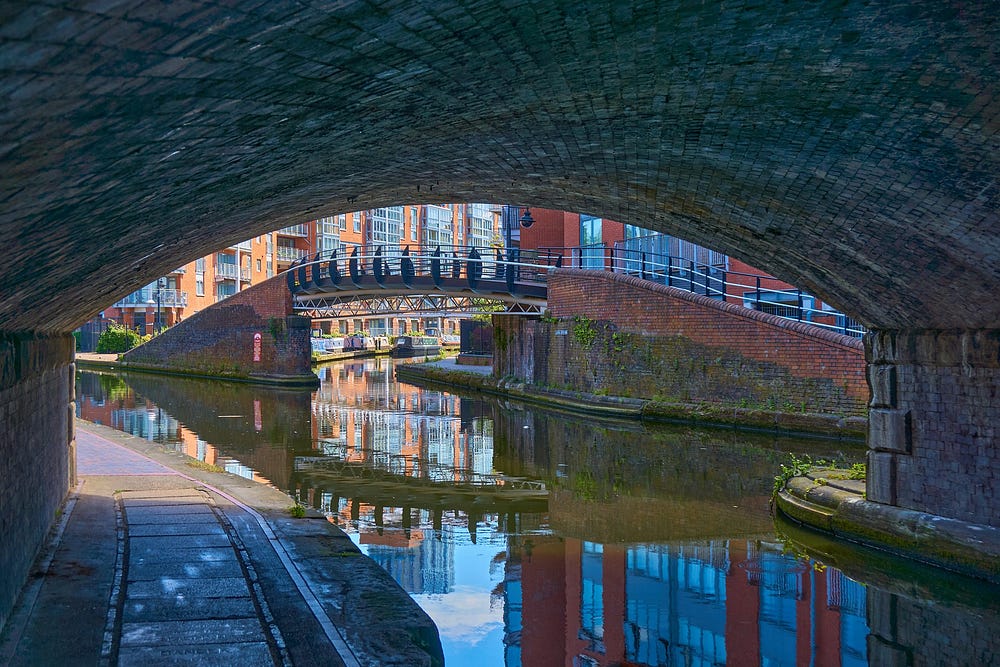
Birmingham, the “City of a Thousand Trades,” has a deeply rooted watchmaking history
Birmingham’s watchmaking history is centered in its historic Jewellery Quarter, which grew from a 17th-century jewelry and toy trade hub into a powerhouse of industrial, machine-made watches by the late 19th century. Key figures like William Ehrhardt pioneered mass production in the 1850s, while the city remains a hub for horological restoration and bespoke watchmaking today.
The extension of UNESCO’s inscription of watchmaking expertise to a cross-Channel area is the subject of a written question currently before the French Senate. Watchmaking expertise, navigational challenges (the quest for longitude), and the history of the Stuarts in the cross-Channel region motivated this parliamentary plea in favor of watchmaking, but also for a “Quay of the Future” on both sides of the Channel to decipher tomorrow. This dual nature of innovation implies that we delve deeper into the watchmaking, scientific, and maritime history on both sides of the Channel and the figures who contributed to it beyond the seas and oceans.
Historical Highlights
- 18th Century Roots: Birmingham, known as the “workshop of the world,” developed expertise in small metalwares and jewelry, establishing its own assay office in 1773, which helped support the watchmaking trade.
- 19th Century Boom: By 1856, William Ehrhardt established one of the first factories to make finished watches using machinery, defying the traditional, fragmented Swiss model.
- The Jewellery Quarter: The area became a massive hub, with around 30,000 people working in jewelry and associated trades — including watchmaking — by the turn of the 20th century.
- Industry Transition: Despite decline in the early 20th century, companies like the Anglo-American Watch Company (est. 1880) were significant, although they still faced competition from imported, lower-cost Swiss movements.
Key Players and Modern Significance
- William Ehrhardt: A pioneering figure in Birmingham watchmaking who founded a factory in 1856, producing watches by machine.
- John Wycherley: Started making rough movements in the 1860s, feeding the demand for British-made watch parts.
- Struthers Watchmakers: Modern watchmakers based in the Jewellery Quarter, known for restoring antique pieces and developing in-house,, hand-built movements.
- School of Jewellery: Part of Birmingham City University, it continues to teach horology, supporting the city’s legacy.

Legacy and Preservation
- The Museum of the Jewellery Quarter on Vyse Street showcases the area’s rich history.
- The trade remains a part of Birmingham’s heritage, with specialists still operating in the Jewellery Quarter, balancing restoration with modern, in-house design.
As a tribute to the watchmaker and repairman Théophile Lognoné, *The Avatars of the Stuarts’ High Street* is the first book dedicated to the cross-Channel watchmaking arc. Beneath the guise of a philosophical essay, this intellectually sophisticated ecological thriller offers a comprehensive and thoughtfully conceived narrative. It may subsequently be translated into English.