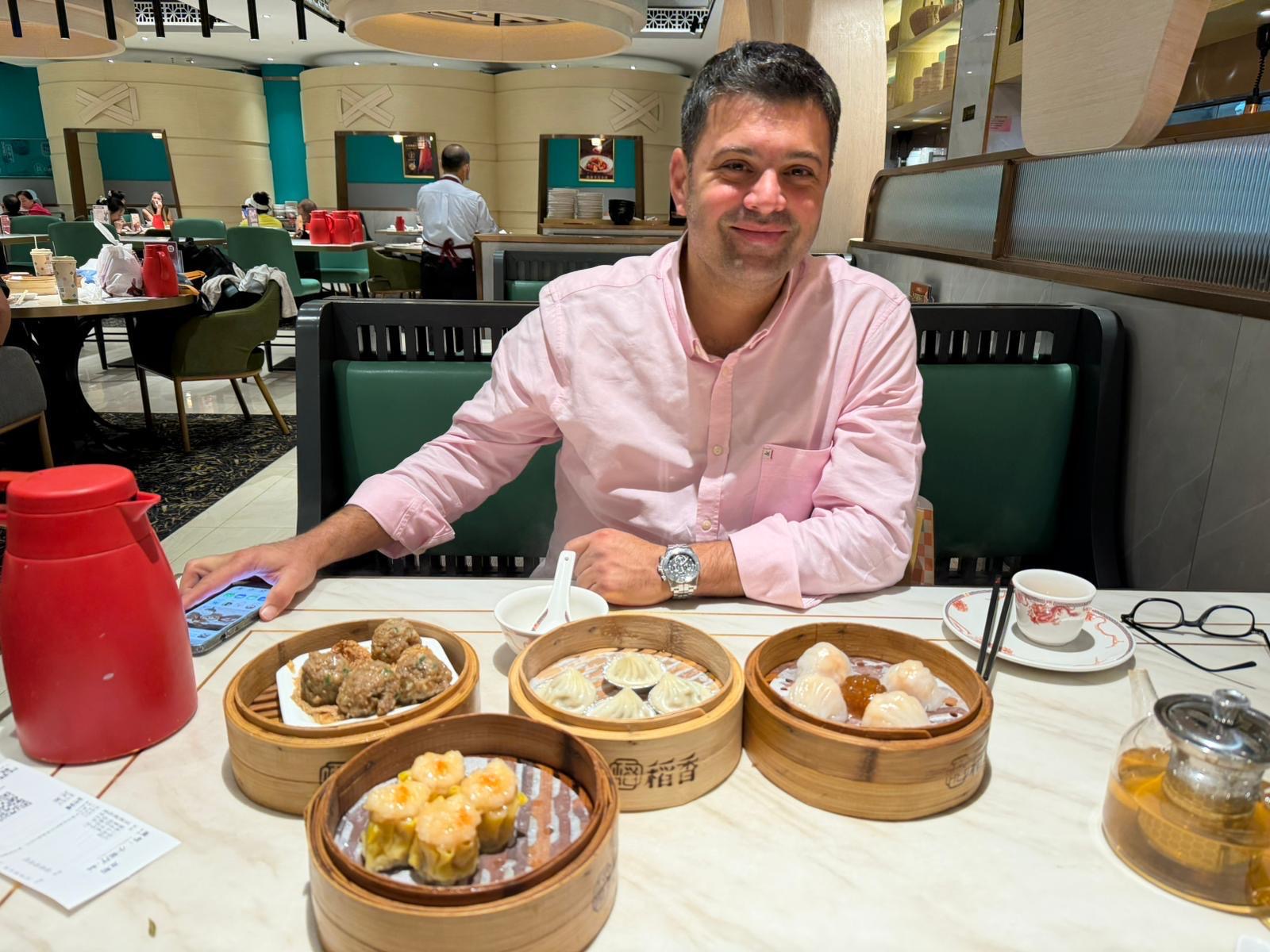
Interview avec Clément Fanara à l’occasion de son voyage en Chine.
À l’occasion de son premier voyage en Chine intérieure, Clément Fanara nous raconte ses impressions et projets. Après de nombreuses années d’expatriation, il rentre en France pour devenir vigneron de première génération au Château Clos des Abbesses (Saint-Émilion). Ce changement de trajectoire ne l’empêche pas de garder un regard vers l’Asie, à travers plusieurs projets.
(See english below 🇬🇧)
Pour votre première fois en Chine intérieure, quelles ont été vos impressions du pays ?
J’ai passé 4 jours en Chine continentale, essentiellement dans la province du Guangdong, à Shenzhen et Guangzhou. Ce qui saute aux yeux, c’est d’abord le caractère avant-gardiste de ces villes. J’ai été très étonné des avancées architecturales et énergétiques, dans un cadre très sécurisé. Un élément qui m’a particulièrement surpris est la part d’électrique dans le parc automobile. Même dans une ville de 17 millions d’habitants comme Shenzhen, il y a très peu de nuisances sonores. C’est la dichotomie des villes très modernes et récentes qui ont eu un développement économique éclair.
Quelles étaient vos attentes de ce voyage ?
En parallèle de l’attente personnelle de découvrir un nouveau pays, je venais aussi dans un objectif professionnel. Il s’agissait d’abord de mieux comprendre le marché du vin en Chine et ensuite de prospecter pour de futures collaborations.
Il est primordial de comprendre le fonctionnement du marché local pour mieux l’appréhender. Saisir sa structure, son organisation, les différences avec les autres pays, les méthodes de distribution et d’importations, … Évidemment, dans un second temps, j’entendais trouver un importateur et/ou distributeur pour commencer un partenariat.
Comment s’est donc passé ce voyage ?
Il n’y a pas en Chine une tradition culturelle du vin comme en Europe. Pour autant, le public chinois à une vraie volonté de connaître et devient amateur depuis plusieurs années.
Nous sommes toujours dans le creux de la vague du « Food and beverage » en Chine, car le marché est devenu mature et la concurrence est plus importante. Évidemment qui dit concurrence, dit attentes du public. J’ai donc travaillé une cuvée spéciale pour ce marché, d’entrée de gamme, pour permettre des prix abordables pour tous les acteurs.
Concernant les opportunités concrètes, les importateurs n’ont pas de besoins immédiats. La prochaine étape est de faire des tests plus détaillés sur certains marchés afin d’aboutir dans les prochains mois à un partenariat dans la province du Guangzhou.
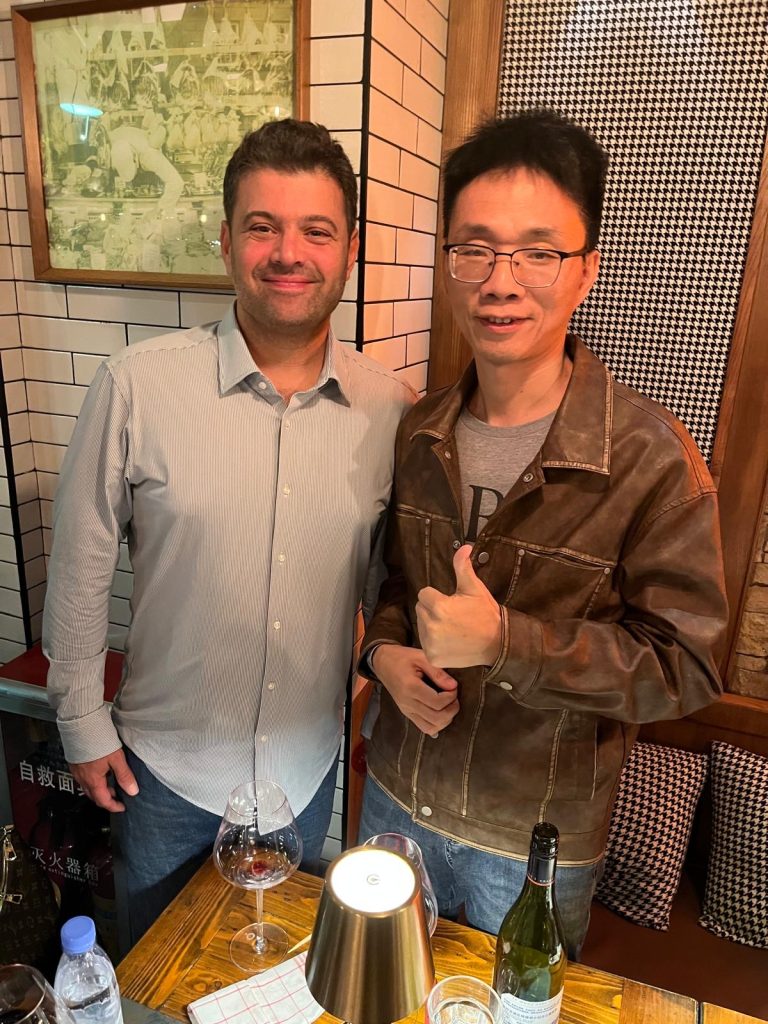
Quelles sont vos impressions lorsque vous retournez à Hong Kong ?
Il s’agissait de ma troisième fois à Hong Kong. C’est une ville que j’adore, car elle se situe à la croisée des chemins entre l’Occident et l’Orient. Il y a une énergie très spéciale, autant sur l’île qu’à Kowloon, avec un dynamisme impressionnant. C’est, à mes yeux, un New York à l’orientale, avec une cuisine vraiment délicieuse. Je remarque cependant que le centre de gravité se déplace progressivement vers la Chine continentale avec l’attractivité de Shenzhen.
Hong Kong est un marché très vieux qui connaît le vin, et notamment le vin rouge. Le marché a été évidemment très impacté par la crise Covid et les stocks ne sont toujours pas écoulés. Il semblerait que les commandes doivent commencer à repartir bientôt, en attendant le retour de la régularité.
Percevez-vous un intérêt particulier pour les vignerons indépendants en Asie ?
Le label « Vigneron indépendant » est un label français, très peu connu à l’étranger. Pour autant, les marchés asiatiques mettent de la valeur dans cette forme d’authenticité. Ils sont attachés à avoir un interlocuteur qui produit et vend un produit. C’est malheureusement un phénomène de plus en plus rare dans la région de Bordeaux avec l’explosion du nombre de sous-traitants et de négociants, depuis une vingtaine d’années. Il est donc crucial de défendre l’idée qu’à Bordeaux, il reste des vignerons qui produisent et vendent un vin authentique et avec du caractère.
Une autre particularité du marché est le paradoxe entre l’attachement à la tradition et le désir de nouveauté. Je propose ainsi des vins avec de nouveaux profils, mais tout de même produits sur une propriété de 140 ans.
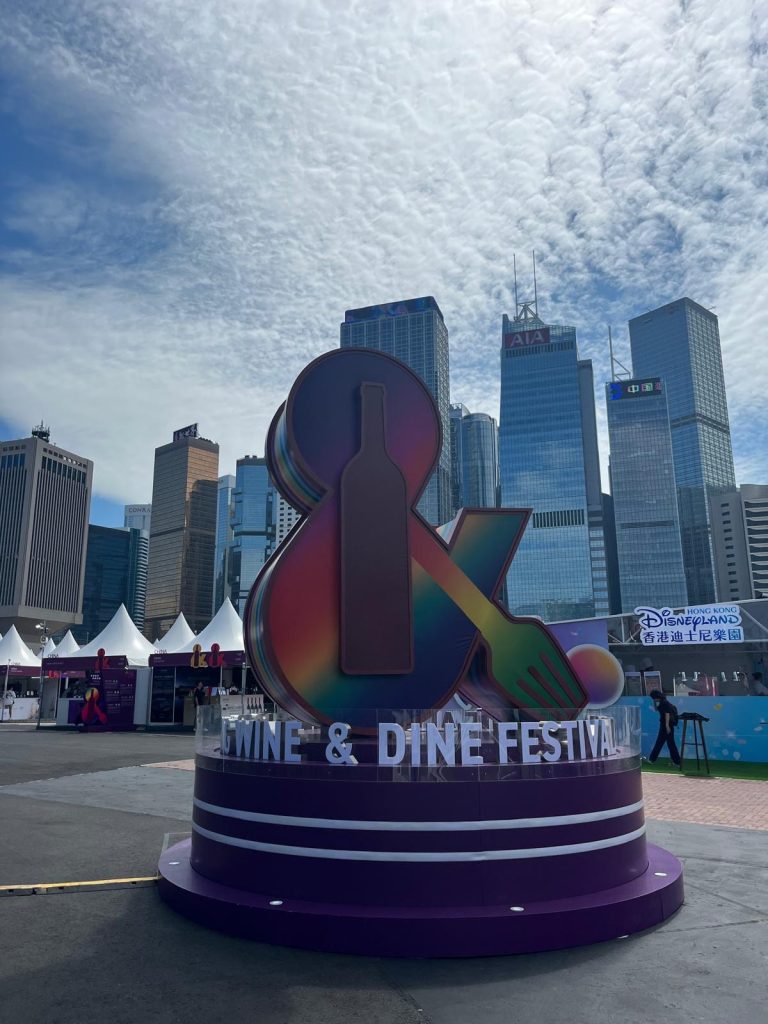
Quelles sont les prochaines étapes pour vous en Asie ?
J’adopte une approche différente selon les marchés. En Chine continentale, je me concentre d’abord sur le Guangdong en espérant développer des ventes dans quelques zones tests, notamment par l’intermédiaire de restaurants européens. À Hong Kong et Singapour, où nous sommes déjà installés, il s’agit de profiter de la relance post-covid. J’espère à plus long terme atteindre par ricochet d’autres provinces chinoises, comme Shanghai, et même d’autres pays, comme la Thaïlande.
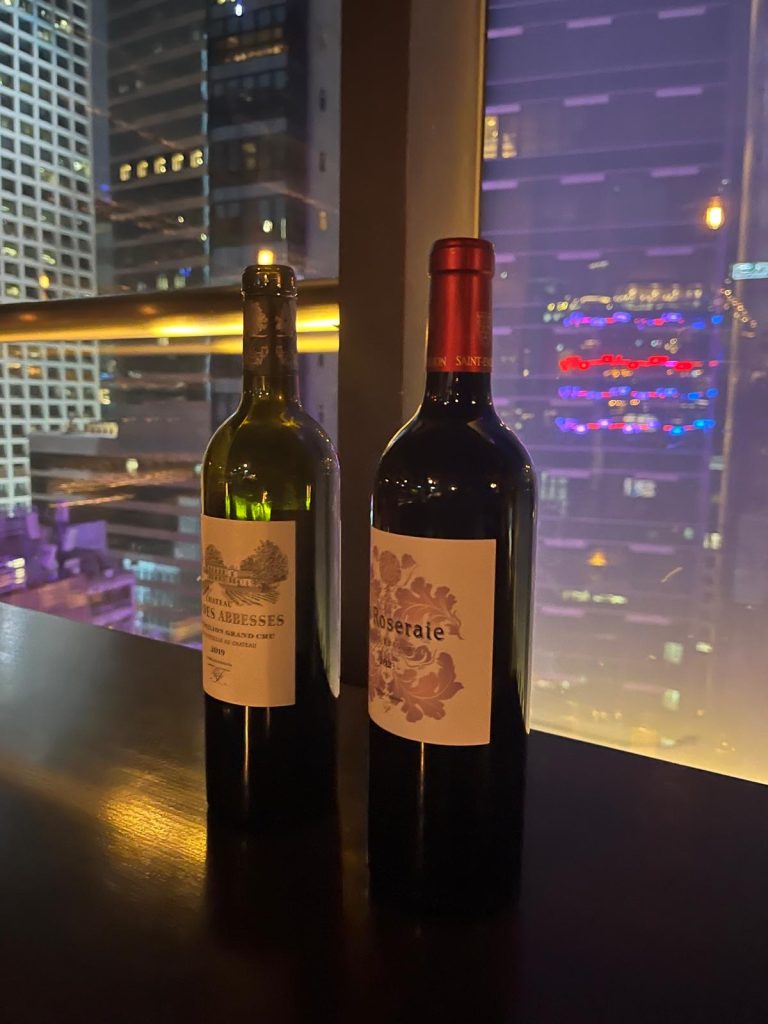
Interview with Clément Fanara on the occasion of his trip to China
On the occasion of his first trip to inland China, Clément Fanara shares his impressions and future projects. After many years as an expatriate, he has returned to France to become a first-generation winemaker at Château Clos des Abbesses (Saint-Émilion). This shift in career path hasn’t stopped him from keeping an eye on Asia through several ongoing projects.
For your first time in inland China, what were your impressions of the country ?
I spent four days in Mainland China, primarily in the Guangdong province, specifically Shenzhen and Guangzhou. What immediately stands out is the avant-garde nature of these cities. I was very impressed by the architectural and energy-related advancements, all within a very secure environment. One element that particularly surprised me was the share of electric vehicles on the road. Even in a city of 17 million people like Shenzhen, there is very little noise pollution. It’s the dichotomy of very modern, recent cities that have experienced lightning-fast economic development.
What were your expectations for this trip ?
Alongside the personal desire to discover a new country, I also came with a professional objective. First, it was about better understanding the wine market in China, and second, prospecting for future collaborations. It is essential to understand how the local market functions to better approach it—grasping its structure, organization, differences from other countries, and distribution and import methods. Naturally, as a second step, I intended to find an importer and/or distributor to begin a partnership.
How did the trip go then ?
China does not have a cultural tradition of wine like Europe does. However, the Chinese public has a genuine desire to learn and has been becoming aficionados for several years now. We are still in the “trough of the wave” for Food and Beverage in China because the market has matured and competition has increased. Naturally, with competition comes higher public expectations. Therefore, I developed a special cuvée for this market—an entry-level range to ensure affordable prices for all stakeholders. Regarding concrete opportunities, importers do not have immediate needs. The next step is to conduct more detailed tests in certain markets to finalize a partnership in the Guangzhou province in the coming months.
What are your impressions when you return to Hong Kong ?
This was my third time in Hong Kong. It’s a city I love because it sits at the crossroads of East and West. There is a very special energy, both on the Island and in Kowloon, with impressive dynamism. To me, it’s like an “Oriental New York,” with truly delicious cuisine. However, I notice that the center of gravity is gradually shifting toward Mainland China with the growing attractiveness of Shenzhen. Hong Kong is a very established market that knows wine well, particularly red wine. The market was obviously heavily impacted by the Covid crisis, and stocks have still not been cleared. It seems that orders should start picking up again soon, pending a return to regularity.
Do you perceive a particular interest in independent winemakers in Asia ?
The “Vigneron Indépendant” label is a French certification that is relatively unknown abroad. However, Asian markets place high value on this form of authenticity. They appreciate having a direct contact who both produces and sells the product. Unfortunately, this is becoming an increasingly rare phenomenon in the Bordeaux region due to the explosion of subcontractors and merchants over the last twenty years. It is therefore crucial to defend the idea that in Bordeaux, there are still winemakers producing and selling authentic wine with character. Another peculiarity of the market is the paradox between an attachment to tradition and a desire for novelty. I am thus offering wines with new profiles, yet produced on a 140-year-old estate.
What are the next steps for you in Asia ?
I am adopting a different approach for each market. In Mainland China, I am focusing first on Guangdong, hoping to develop sales in a few test zones, notably through European restaurants. In Hong Kong and Singapore, where we are already established, the goal is to capitalize on the post-Covid recovery. In the longer term, I hope to reach other Chinese provinces, such as Shanghai, and even other countries like Thailand.